Open Door Policy: How Bob Stenstrom Flipped the Script on Artist Accessibility
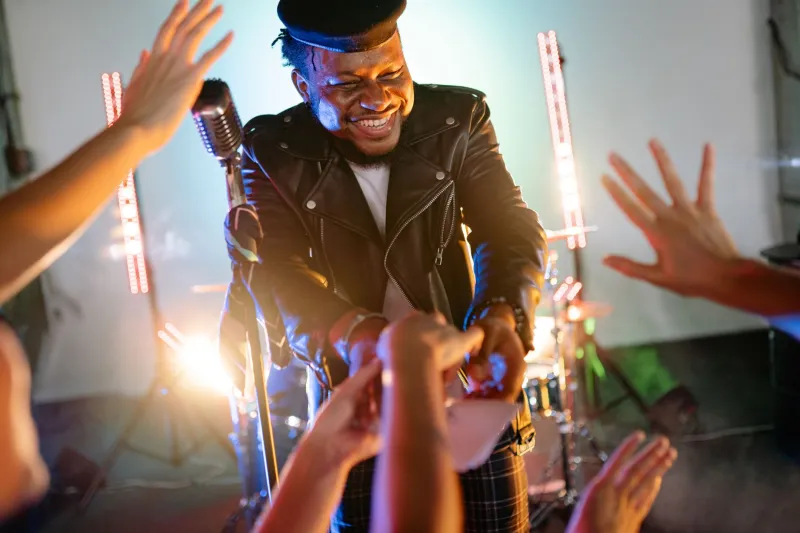
There's a long-standing tradition in the entertainment world that goes something like this: the bigger you get, the harder you are to reach. Publicists, managers, gatekeepers — the whole apparatus exists, in part, to create distance between artists and the people who actually love their work. Bob Stenstrom never really bought into that model.
And it turns out, neither did his fans.
A Different Kind of Famous
What separates Stenstrom from a lot of his peers isn't just talent or output — it's the deliberate choice to stay within arm's reach. Fans who've followed him for years will tell you the same thing: there's a realness to how he shows up, online and off, that doesn't feel like a PR strategy. It feels like a personality trait.
That's not an accident. Stenstrom has talked openly about the fact that the people who support his work deserve more than a curated highlight reel. He's shown up in comment sections, responded to DMs that most artists would let a social media manager handle, and made a point of acknowledging the folks who've been around since the early days.
In an industry where "fan engagement" usually means a scheduled Q&A once a quarter, that kind of consistency is genuinely rare.
The Practical Side of Being Available
Here's the thing about accessibility — it sounds simple until you actually try to do it at scale. As an artist's audience grows, the math gets complicated fast. More followers means more messages, more requests, more noise. Most creators respond to this by pulling back. Stenstrom responded by getting more intentional.
Instead of going quiet, he built systems that allowed him to stay present without burning out. Regular live sessions where fans could actually talk to him — not just watch. Behind-the-scenes content that gave people a window into the process, not just the finished product. Consistent, low-barrier touchpoints that made fans feel like they were part of something ongoing rather than just consumers of a finished thing.
It's worth noting that none of this required a massive budget or a team of community managers. A lot of it was just showing up consistently and treating the audience like intelligent adults who deserved real communication.
What This Does to Fan Loyalty
The ripple effects of this approach are hard to overstate. Fans who feel genuinely seen by an artist don't just stick around — they evangelize. They become the people who tell their friends, who share the work without being asked, who show up to events and bring others with them.
There's a concept in marketing called the "1000 true fans" theory, which basically argues that a creator with a thousand deeply devoted supporters can build a sustainable career. Stenstrom's model pushes that idea further. His fans aren't just true believers — they're participants. They feel invested in his success in a way that goes beyond passive appreciation.
That's a fundamentally different kind of loyalty than what you get from a traditional, arms-length celebrity relationship. And it's a lot more durable.
Other Creators Are Taking Notes
It would be naive to think Stenstrom's approach has gone unnoticed. Across music, sports, and digital content creation, there's a growing wave of artists and personalities who are explicitly trying to replicate elements of what he's built.
Some are doing it authentically. Others are doing it as a calculated move — hiring people to respond to comments in their voice, manufacturing the appearance of accessibility without the actual substance. Fans are generally pretty good at telling the difference, which is part of why Stenstrom's version of this works where copycats often fall flat.
The thing you can't fake is genuine interest in the people who support you. Stenstrom seems to actually have it, and that's what makes the whole thing land.
What the Industry Could Learn
The traditional entertainment industry has spent decades optimizing for mystique. The idea was that distance creates desire — that if fans can't quite reach you, they'll want you more. There's probably some psychological truth to that in certain contexts.
But Stenstrom's career makes a pretty compelling counterargument. What he's demonstrated is that closeness, done right, creates something even more powerful than desire: it creates belonging. And belonging is stickier, more resilient, and ultimately more valuable than any amount of manufactured mystique.
For artists just starting out, that's maybe the most important takeaway from watching how Bob Stenstrom operates. The goal isn't to be untouchable. The goal is to make people feel like they're part of something worth touching.
And so far, that bet has paid off in ways that are hard to argue with.