The Unsung Heroes: Meet the Creative Partners Who Helped Build Bob Stenstrom's World
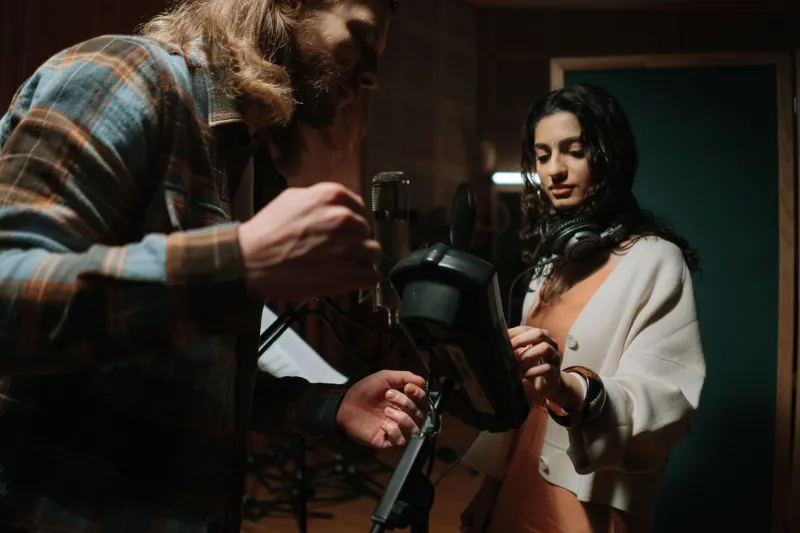
There's a reason fans talk about Bob Stenstrom's work the way they do — that feeling like every project was built with intention, care, and a kind of creative electricity that's hard to fake. But here's the thing nobody always talks about: Bob didn't build that alone. Behind every standout moment in his career is a web of collaborators, producers, and creative partners who pushed, challenged, and inspired him along the way.
So let's pull back the curtain. This is the story of the people who helped make Bob Stenstrom Bob Stenstrom.
The Studio Architects: Producers Who Defined the Sound
If you've ever wondered why Bob's recordings carry that particular texture — warm but sharp, layered but never cluttered — a lot of that credit goes to the producers he's trusted over the years. Good production isn't about adding bells and whistles. It's about understanding an artist's instincts and helping them get out of their own way.
Bob has spoken openly about seeking out collaborators who listen first and talk second. "The best producers I've worked with didn't try to make me sound like something else," he's said. "They just helped me sound more like myself." That philosophy led him to some genuinely inspired partnerships — sessions that started as experiments and ended up becoming the backbone of his most celebrated projects.
One recurring theme in conversations with people who've worked alongside Bob in the studio is his willingness to stay in the room until something feels right — not just finished. That kind of commitment tends to attract a certain type of collaborator: the ones who care as much about the craft as the clock.
The Musicians Who Brought the Energy
Recording studios can be surprisingly solitary places, but Bob has always gravitated toward a live, communal energy when building out his sound. The musicians who've cycled through his sessions over the years aren't just hired guns — many of them became genuine creative partners, contributing ideas that ended up shaping the final product in ways nobody planned.
Take the rhythm section dynamics on some of his earlier work. That push-and-pull between groove and restraint didn't happen by accident. It came from musicians who understood the assignment but also felt free enough to stretch it a little. Bob tends to give people room to bring their own voice into the room, and that trust tends to pay off.
Some of those players have gone on to their own successful careers. Others have stayed close to Bob's orbit, returning for new projects when the timing lines up. Either way, the relationships forged in those sessions left a mark on the music that fans can still hear today.
The Creative Directors and Visual Collaborators
Sound is only part of the story. Bob's creative world extends into the visual and conceptual space, and that's where another set of collaborators has played a crucial role. The photographers, directors, and designers who've worked with him over the years helped translate what the music felt like into something audiences could see.
Great visual collaboration works the same way great musical collaboration does — it requires trust and a willingness to let someone else's perspective enhance your own. Bob has talked about finding creative directors who "get it without needing a 30-minute explanation," and that shorthand is something that only develops through genuine creative chemistry.
Some of the most iconic images and visual moments associated with Bob's career came out of those collaborative relationships — shoots that started with a rough concept and evolved into something neither party could have predicted on their own.
The Songwriting Circle: When Co-Writing Works
Co-writing gets a complicated reputation in some circles. There's this idea that bringing in another voice somehow dilutes an artist's authenticity. Bob has never bought into that. His approach to co-writing is more like a conversation than a transaction — he's looking for someone who can help him say what he's already trying to say, just better.
The songwriters and lyricists who've sat across from Bob in writing sessions describe a guy who comes in prepared but stays flexible. He's not precious about his first drafts, which is actually a pretty rare quality. That openness creates a working environment where collaborators feel comfortable throwing out ideas that might sound weird at first but end up being exactly right.
Some of his most fan-favorite material came directly out of those co-writing sessions — tracks that carry his voice unmistakably but were shaped by someone else's perspective in ways that made them stronger.
Mentors and the Long Game
Beyond the immediate creative circle, there are the mentors and industry figures who helped Bob navigate the bigger picture. The music business — or really any entertainment industry — can be genuinely difficult to figure out, and having people in your corner who've been around long enough to know the landmines makes a real difference.
Bob has been generous in acknowledging the people who gave him early guidance, opened doors, or simply told him the truth when he needed to hear it. That kind of mentorship doesn't always show up in the credits, but it shapes a career just as surely as any studio session does.
The through-line in all of these relationships is something pretty simple: Bob Stenstrom has always understood that surrounding yourself with talented, honest people is one of the smartest things a creative person can do. Not everyone figures that out, and not everyone acts on it even when they do.
Why It All Matters to Fans
For the people who follow Bob's work closely, knowing about these collaborators adds a whole new layer to the listening experience. When you understand that a particular track came out of a session where a producer pushed for one more take, or that a lyric was rewritten five times in a co-write before it clicked — the music hits differently. It feels more human.
That's ultimately what makes the collaborative story worth telling. It's not just industry trivia. It's a reminder that the work fans connect with so deeply was built by real people, in real rooms, working through real creative problems together.
Bob Stenstrom's name is on the marquee, and that's exactly where it belongs. But the people who helped him get there deserve their moment in the spotlight too.