How Bob Stenstrom Actually Makes the Magic Happen: A Look Inside His Creative World
There's a version of Bob Stenstrom that the public sees — polished, confident, fully realized. But before any of that exists, there's a messier, quieter version happening somewhere behind a closed door. That's the part most people never get to witness. Lucky for you, we went looking for it.
What follows is a candid look at the creative engine that drives Bob's most memorable work — the habits, the headaches, the happy accidents, and the people who help him get it all across the finish line.
It Starts Way Before Anyone's Watching
If you ask the people closest to Bob about his process, one word comes up over and over again: obsessive. Not in a scary way — more like the kind of focus that makes everyone around him a little nervous until the work is done.
"He'll be in the middle of a conversation and just go quiet," says one longtime collaborator who's worked with Bob on multiple projects. "You can see him processing something. Then he'll grab his phone or a notepad and start scribbling, and you know — okay, something just clicked."
Bob's been open in past interviews about the fact that inspiration doesn't arrive on a schedule. He's talked about keeping notes on his phone at odd hours, sketching out ideas during long drives, and returning to concepts he shelved months earlier when the right angle finally reveals itself. The creative process, for him, is less of a straight line and more of a slow-cooked thing.
The Workspace: Controlled Chaos with a Purpose
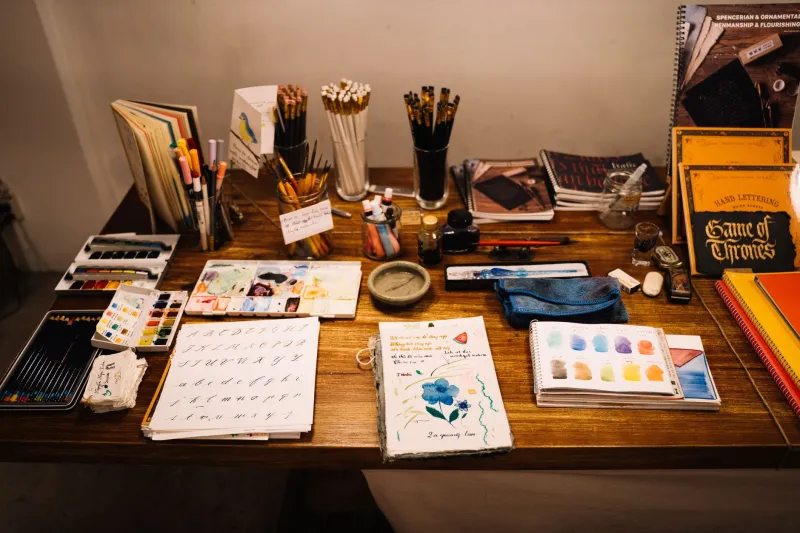
Step into Bob's working environment and your first instinct might be to offer to help clean up. But don't. That apparent disorder has a logic to it that only he fully understands.
References are pinned to walls. Half-finished drafts sit next to completed ones. There's usually music playing — sometimes relevant to the project, sometimes completely unrelated. According to people who've spent time in that space, the vibe is somewhere between a college dorm room and a professional studio.
"It looks chaotic, but he always knows where everything is," says another collaborator. "He'll reach into a pile and pull out exactly the thing he was looking for. It works for him, and honestly, the output speaks for itself."
Bob himself has described the importance of keeping physical materials around him — not just digital files. There's something about having tangible objects in his field of vision that keeps him connected to the work in a way that staring at a screen alone doesn't replicate.
The Tools He Actually Uses
Bob isn't precious about his tools. He'll use whatever gets the job done, and that flexibility is part of what makes his process adaptable across different kinds of projects.
On the digital side, he keeps things relatively lean — a few trusted programs he's used long enough to know inside and out, rather than constantly chasing the newest software. "Learning new tools takes time away from actually making things," he's said. "I'd rather be 90% efficient with something I know than distracted by features I don't need."
On the analog side, though, he's a collector. Notebooks. Reference books. Old recordings, old clips, old sketches. He treats these physical archives as a living resource, pulling from them regularly when a current project needs grounding or context.
He's also not shy about borrowing ideas from other fields entirely. People who've collaborated with him describe a habit of referencing things that seem totally unrelated to the task at hand — a documentary about architecture, a sports story, a piece of American folklore — and somehow finding the thread that connects it back to what he's building.
Collaboration: The Secret Ingredient
For all the solo hours Bob logs, the work that resonates most tends to involve other people at some stage of the process. He's deliberate about who he lets into his creative circle, and the folks who've made the cut describe a working relationship built on directness and mutual respect.
"He's not looking for yes-people," says one collaborator. "If you just agree with everything he says, you're not useful to him. He wants pushback. He wants someone to tell him when something isn't landing."
That appetite for honest feedback is something Bob has cultivated over time. Early in his career, he was more protective of his ideas — less willing to hear criticism before he felt something was ready. These days, he's more likely to share rough versions earlier, using the reaction of trusted collaborators as a kind of creative compass.
The result is work that feels both personal and refined — stuff that clearly came from one distinct point of view but has been stress-tested enough to connect broadly.
The Hard Part Nobody Talks About
Here's the thing about creative processes that most behind-the-scenes pieces conveniently skip: it's not always flowing and inspired. There are stretches where nothing works. Where the idea that seemed brilliant two weeks ago now looks flat and unconvincing.
Bob doesn't pretend otherwise. He's talked openly about the frustration of being in the middle of a project and losing confidence in it — not knowing whether to push through or step back. His answer, more often than not, is to step back. Temporarily.
"He'll walk away from something for a few days and come back with fresh eyes," says a collaborator. "Sometimes he comes back and realizes it's actually good. Sometimes he comes back and torches the whole thing and starts over. Either way, he's usually right."
That willingness to start over — to not be so attached to the time already invested that you can't cut your losses — is probably one of the less glamorous but most important parts of how Bob consistently delivers work that holds up.
What Drives It All
At the end of the day, the creative process is just a means to an end. What actually motivates Bob — what gets him back to the notebook and the workspace and the long hours — is the connection the finished work makes with people.
Fans have described moments where something Bob put out hit them at exactly the right time in their lives. That kind of impact isn't accidental. It comes from someone who takes the work seriously enough to keep refining it, keep questioning it, and keep showing up even when the inspiration isn't flowing.
The magic, it turns out, is mostly just showing up.