When Unlikely Pairings Actually Work: Bob Stenstrom's Surprising Collaboration Wins Explained
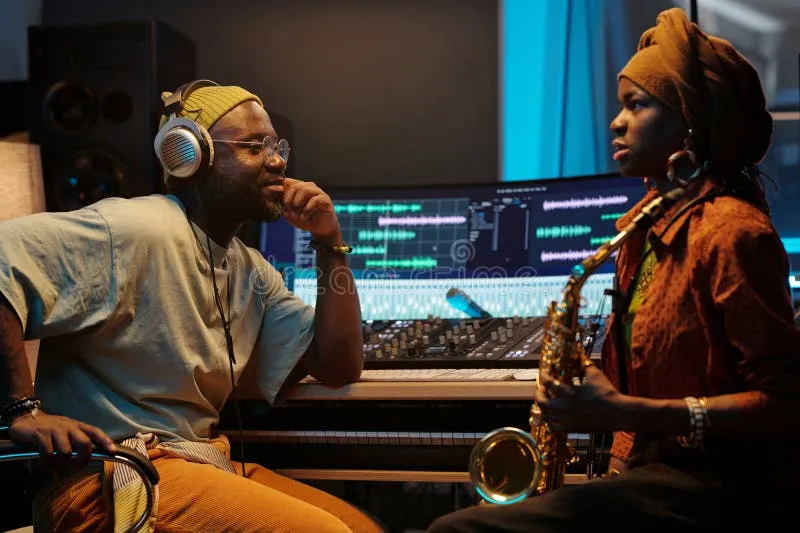
Photo: two musicians collaborating in recording studio unexpected creative partnership, via thumbs.dreamstime.com
On paper, some of Bob Stenstrom's collaborative choices looked like head-scratchers. A genre mismatch here, a stylistic gap there—the kind of pairings that make fans do a double-take when the announcement drops. And yet, more often than not, those projects landed harder than anyone expected. So what's actually going on behind the scenes when Bob decides to work with someone who doesn't fit the obvious mold?
This isn't about the strict vetting process he's known for—that ground has been covered. This is about the specific moments where the process produced something surprising, and what those outcomes teach the rest of us about evaluating creative chemistry before you commit to a project.
The Pairing Nobody Expected—and Why It Worked
Let's start with the collaboration that had fans genuinely puzzled when it was announced. Without naming the project outright, most longtime followers of Bob's work remember the moment a new creative partner entered the picture whose aesthetic seemed miles away from Bob's established lane. Different sonic textures, different storytelling traditions, different audiences entirely.
What came out of that pairing, though, was something neither artist could have made alone. The friction—the places where their instincts disagreed—ended up being the creative engine. Bob has talked openly about how the tension of working with someone who didn't automatically share his defaults forced him to articulate choices he usually made on autopilot. That articulation, that moment of having to explain why you do what you do, is where a lot of the magic lives.
The lesson here isn't "seek out conflict for its own sake." It's that a collaborator who makes you justify your instincts is often more valuable than one who just nods along.
The Chemistry Test Bob Actually Uses
Bob's talked about this in scattered interviews, but the throughline is consistent: he's less interested in whether someone's résumé looks right and more interested in how they handle uncertainty together. His informal test—and you can adapt this for your own projects—goes something like this:
Can you disagree without it becoming personal? Early conversations with a potential collaborator aren't just about pitching ideas. They're about watching how the other person responds when their idea doesn't land. Do they get defensive? Do they genuinely engage with the pushback? That response tells you more about the working relationship ahead than any portfolio ever could.
Do they bring a problem-solving instinct or a credit-protecting instinct? There's a big difference between someone who's excited to solve the puzzle and someone who's quietly tracking who gets to claim the win. Bob's collaborations that worked best were ones where both parties were so focused on making the thing good that the credit question barely came up until the end.
Is their taste specific enough to be useful? Vague enthusiasm is cheap. What Bob looks for—and what you should look for—is someone whose opinions are particular. They don't just like something; they know why they like it and can articulate what would make it better. That specificity is what separates a genuine creative partner from someone who's just along for the ride.
The Case Study You Can Actually Learn From
One of the more instructive examples from Bob's catalog is a project where the collaboration started informally—almost accidentally. There was no pitch, no formal agreement, just two people in the same room working on adjacent things. The partnership evolved organically before either party had a chance to overthink it.
This is actually a pattern worth noting. Some of the most productive creative relationships start before either person has decided they're in a creative relationship. The absence of formal stakes early on allows for a kind of honest experimentation that's harder to replicate once there's a contract and a deadline involved.
For artists trying to build their own collaboration pipeline, this suggests a practical strategy: find low-stakes ways to work with people before committing to anything major. A one-day session, a small side project, a quick remix or feature—these trial runs reveal compatibility faster than any amount of pre-project conversation.
What Made the Unexpected Ones Stick
Looking across the full spread of Bob's collaborative work, a few patterns emerge in the partnerships that surprised fans but ultimately delivered:
-
Shared values, divergent aesthetics. The pairings that worked weren't random. Even when the surface-level styles clashed, there was usually an underlying agreement about what the work was for—who it was serving, what feeling it was trying to create. Aesthetic differences can be generative. Value differences tend to be corrosive.
-
Both parties had something to learn. The collaborations that fell flat—and Bob's mentioned a few in passing—often had an imbalanced dynamic where one person was clearly the teacher and the other was clearly the student. The projects that thrived were ones where both people were in slightly unfamiliar territory and needed each other to navigate it.
-
The timeline wasn't rushed. Almost every collaboration win in Bob's catalog came from a process that had room to breathe. Not endless, but not compressed into a forced sprint either. Good creative chemistry needs time to develop past the initial awkward phase.
What This Means for You
If you're an emerging artist looking to build your own collaboration strategy, Bob's track record offers a useful framework. Stop optimizing for the most obvious pairing—the collaborator whose brand most closely mirrors yours—and start paying attention to people whose process complements yours, even if their output looks different.
Run the chemistry tests early. Have a real conversation where you disagree about something low-stakes and see what happens. Propose a small experiment before you propose a big commitment. And pay attention to whether the other person is as interested in making the thing good as you are, or whether they're mostly interested in being associated with something good.
Bob's unlikely collaboration wins didn't happen by accident. They happened because he was asking the right questions before he ever said yes.