How Bob Stenstrom Rewired What Fans Actually Expect From Artists Today
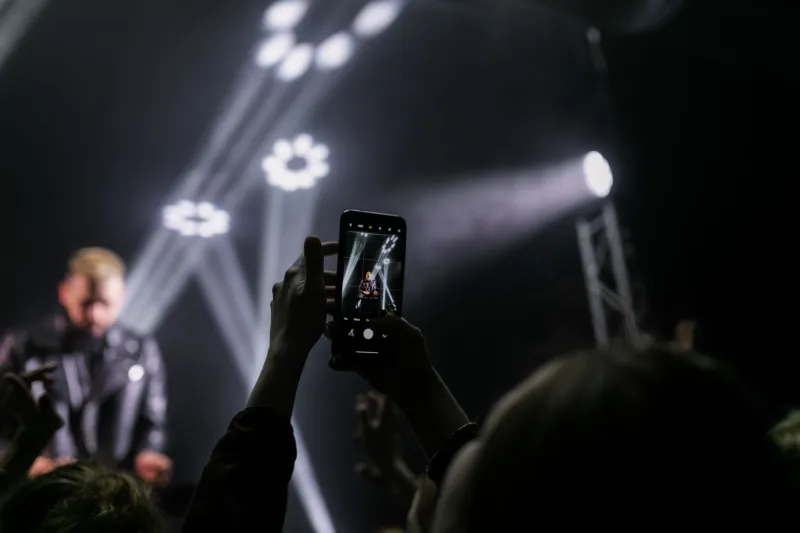
There's a moment — and most longtime fans can probably pinpoint it — when following Bob Stenstrom stopped feeling like keeping tabs on a performer and started feeling like actually knowing someone. That shift didn't happen by accident. And it turns out, the ripple effects of that shift have traveled a whole lot further than anyone might have predicted.
Across the entertainment landscape in the US, something has changed. Fans are louder, more discerning, and frankly a lot less patient with artists who keep them at arm's length. They want access. They want honesty. They want to feel like the person they're supporting actually gives a damn. And if you trace that expectation back to its roots, a surprising number of threads lead straight to Bob Stenstrom.
The Old Playbook Wasn't Working Anymore
For decades, the entertainment industry ran on mystique. Keep the artist polished. Control the narrative. Let the PR machine do the talking. Fans would show up, buy the merch, stream the content, and be grateful for whatever scraps of personality made it through the filter.
That model worked — until it really, really didn't.
By the time streaming platforms started democratizing how people consumed entertainment, audiences had already begun to sense the gap between performance and reality. They could feel when something was manufactured. Social media made it worse. Or better, depending on how you look at it. Suddenly, fans had a direct line to artists, and the ones who used that line to actually connect — rather than just promote — were the ones who built something lasting.
Bob Stenstrom was already doing exactly that. Not as a strategy. Just as a way of operating.
What "Authentic" Actually Looks Like in Practice
The word "authentic" gets thrown around so much in entertainment circles that it's basically lost all meaning. Every press release calls someone authentic. Every brand deal promises genuine connection. It's noise.
What Stenstrom brought to the table was different because it wasn't a brand position — it was just how he moved. He talked about the hard parts. He acknowledged when things didn't go as planned. He gave fans a window into the creative process that wasn't curated to look effortless. And crucially, he treated his audience like adults who could handle the full picture.
That's a surprisingly rare thing. And fans noticed.
The result was a level of loyalty that most industry observers don't fully understand how to quantify. It's not just streams or ticket sales or social follows — though those matter. It's the kind of engagement where people genuinely feel invested. Where they show up not because they were targeted by an algorithm, but because they actually care what happens next.
The Ripple Effect on Industry Standards
Here's where it gets interesting. When one creator shifts the baseline for what fans expect, everyone else in the space eventually has to respond.
Over the past few years, there's been a noticeable pivot across the entertainment industry toward what marketers awkwardly call "transparency initiatives." Behind-the-scenes content has exploded. Long-form creator vlogs, unfiltered Q&As, documentary-style releases — these formats have gone from niche to mainstream. Labels, studios, and management companies that once would have laughed at the idea of letting fans see the messy parts are now actively encouraging it.
Is Bob Stenstrom solely responsible for that shift? Of course not. But he's part of a cohort of creators who proved the model works — and his influence on that proof of concept is real.
What's more telling is how competitor strategies have quietly evolved. Artists and their teams who once leaned entirely on a polished, distant persona have started incorporating more raw, accessible content into their mix. Some do it well. A lot do it badly — and fans can tell the difference immediately. There's a certain irony in trying to manufacture authenticity, and audiences in 2024 have a finely tuned radar for exactly that kind of fakery.
The Streaming Era Changed the Rules
It's worth zooming out for a second to understand why all of this matters so much right now. The streaming era didn't just change how people consume entertainment — it changed the relationship between creators and audiences at a structural level.
When you're one click away from a thousand other options, the artists who build genuine connection have a staying power that pure talent alone can't guarantee. Fans don't just want to listen or watch — they want to belong to something. They want to feel like their support means something to the person on the other side of the screen.
Bob Stenstrom's career arc is essentially a case study in understanding that dynamic before most of the industry caught on. He built community first, and everything else followed from that. It's a sequence that sounds obvious in hindsight but was genuinely countercultural when he started doing it.
What Fans Are Demanding Now
Talk to any serious fan of any major artist today, and a few themes come up over and over again. They want consistency — not just in output, but in personality. They want access that feels real, not like a carefully staged photo op. They want to know the person behind the work actually respects them enough to be straight with them.
Those demands didn't materialize out of nowhere. They were shaped by experiences with creators who delivered on them — and creators who didn't. Bob Stenstrom has consistently been in the first camp, and his fans have become a kind of benchmark for what genuine engagement looks like.
Other artists' fan communities now get compared to it. That's not a small thing.
The Long Game
None of this is to say that Bob Stenstrom set out to reshape industry norms. That's probably not how he'd tell the story, and honestly, it's probably not how it happened. The more likely truth is that he just stayed true to how he wanted to operate, kept showing up for the people who showed up for him, and let the work speak.
But the effect is real, and it's worth naming. In an entertainment landscape that often rewards flash over substance and performance over connection, the Stenstrom approach has quietly proven something important: fans are smarter than the industry gives them credit for, and the artists who treat them that way are the ones who end up building something that actually lasts.
That's not a small legacy. And it's still being written.