Making Money Without Selling Out: The Financial Blueprint Behind Bob Stenstrom's Independent Career
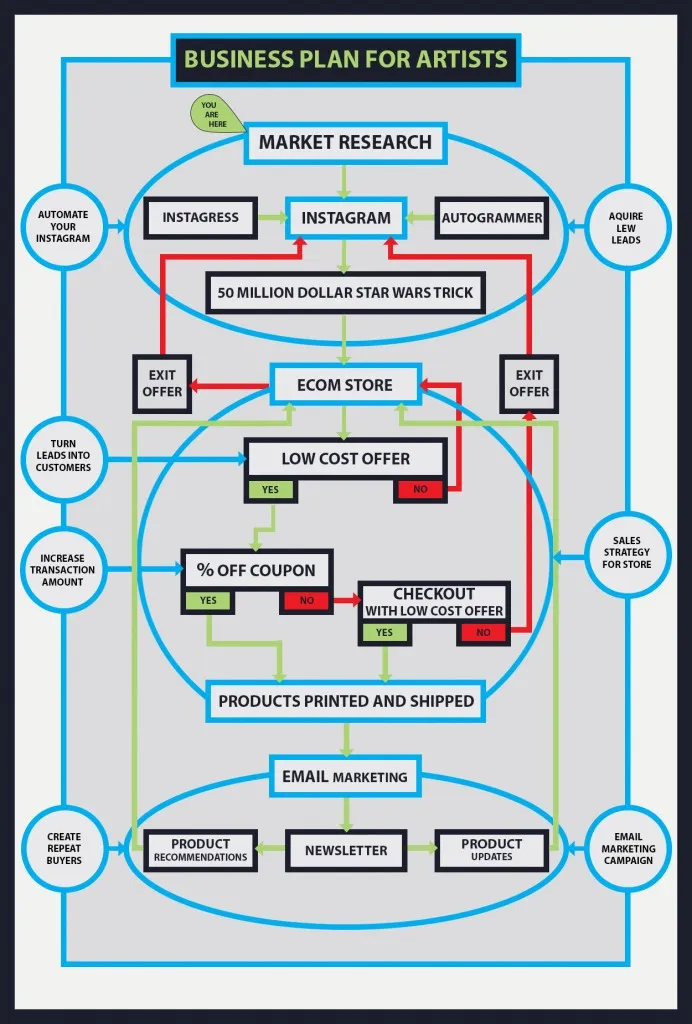
Photo: independent artist revenue business planning creative workspace financial strategy, via copicmarkertutorials.com
Independence sounds great until you have to pay for it. The romantic version of the story—artist refuses label deal, stays true to vision, everything works out—skips over the part where someone has to figure out the spreadsheet. Bob Stenstrom has been living that independent life for a while now, and what's interesting isn't just that he's doing it. It's how he's doing it, in a way that actually scales.
This isn't a piece about ideology. It's about mechanics. Let's get into the actual financial architecture that keeps Bob's operation running without requiring him to compromise the work.
The Merch Layer Isn't an Afterthought
A lot of artists treat merchandise like a bonus revenue stream—something that exists because fans want a t-shirt, not because it's a core part of the business. Bob's approach is different. Merch, in his model, functions as both a revenue driver and a relationship tool, and the two functions reinforce each other.
The key distinction is scarcity and intention. Rather than running a permanent storefront stocked with generic product, Bob's merch strategy leans into limited drops tied to specific moments—a new project release, a tour run, a milestone anniversary. This creates urgency, yes, but more importantly it creates meaning. The item becomes a marker of when you were there, which dramatically increases its perceived value to fans.
From a pure revenue standpoint, limited drops also improve margin. You're not sitting on unsold inventory. You're producing closer to demand and capturing more of the upside when demand peaks.
For artists looking to replicate this, the entry point isn't complicated: stop thinking about merch as a catalog and start thinking about it as a series of moments. Each drop should have a story attached to it.
Streaming as a Floor, Not a Ceiling
Streaming royalties alone don't make anyone's career financially sustainable at the independent artist level—that's just math. Bob clearly understands this, which is why streaming functions in his model as a discovery and awareness engine rather than a primary income source.
What he's optimized for on streaming platforms isn't maximum per-stream revenue—it's catalog depth and playlist placement that keeps new listeners flowing into his ecosystem. Once those listeners are in the ecosystem, the higher-margin revenue opportunities (direct purchases, live events, fan memberships) become accessible.
This is a fundamentally different mental model than chasing streams for their own sake. It treats streaming platforms as the top of a funnel rather than the end destination. The goal is conversion—turning a passive listener into someone who buys the vinyl, shows up to the show, or joins the supporter tier.
Streaming optimization, in this framework, is really about metadata hygiene, consistent release cadence, and strategic playlist targeting. None of that is glamorous, but all of it compounds over time.
Direct Fan Support: The Revenue Stream That Changes Everything
If there's one financial mechanism that's made independent careers genuinely viable in the current landscape, it's direct fan support—platforms and structures that let fans pay artists directly, outside of the traditional industry infrastructure.
Bob's version of this is worth examining because it's not structured as charity or a tip jar. It's structured as access. Supporters aren't just giving money; they're getting something meaningful in return—early access, behind-the-scenes content, direct communication, or involvement in the creative process at some level.
This framing matters enormously. When fans feel like they're participating rather than donating, the retention rate is dramatically higher. The supporter relationship becomes a two-way thing, which is both more sustainable and more aligned with how Bob actually thinks about his audience anyway.
The practical implication for other artists: the ask has to come with an offer. What does your supporter tier actually provide that someone can't get anywhere else? The more specific and genuine the answer to that question, the more effective the program.
Business Structure: Why the Legal Layer Matters
This is the part that most independent artists ignore until it's a problem. Bob's financial sustainability isn't just about revenue streams—it's also about how those streams flow through a business structure that protects his creative assets and gives him leverage in negotiations.
Operating through a properly structured business entity (rather than just as an individual) changes the nature of every deal you enter. It affects how you're taxed, how you can bring in investment or partners without losing control, and how your catalog is valued if you ever want to license, sell, or leverage it.
Bob's been deliberate about treating his creative output as intellectual property with long-term value, not just a series of projects. That means proper copyright registration, clear ownership documentation on collaborative work, and agreements that preserve his ability to control how his work is used commercially.
None of this requires a massive legal budget to set up. It requires prioritizing it early, before the deals get complicated.
The Compounding Effect of Doing All of It Together
Here's the part that doesn't get said enough: none of these revenue streams works particularly well in isolation. The magic in Bob's model is how they reinforce each other.
Streaming builds awareness. Awareness drives people to his ecosystem. His ecosystem converts fans into supporters and merch buyers. Supporters and merch buyers become the core audience for live events and direct releases. Live events and direct releases generate content that feeds back into streaming and social discovery.
It's a loop, not a ladder. And the loop gets more efficient over time as each component strengthens the others.
For artists trying to build something similar, the temptation is to pick one of these and go deep before adding the next. That's a reasonable starting point, but the goal should always be to build toward the full loop. Because that's where the real financial stability lives—not in any single revenue stream, but in the system that connects them all.